
Review: Spider-Man: Brand New Day
Warning: This review contains light spoilers for Spider-Man: Brand New Day.
Senses tingled. Emotions overloaded. And for the first time in some time, a Marvel Studios movie sparked something deep inside.
Not because the world was ending. Not because timelines were collapsing or universes were crashing into one another. But because Peter Parker’s world had already ended, and Spider-Man: Brand New Day forces him to wake up every morning and continue living in what remains.
Even the familiar Marvel Studios fanfare feels different this time. Usually a rallying cry for the spectacle to come, here it lands more like a warning, setting the tone for a nearly two-and-a-half-hour film about loss, loneliness and the exhausting work of pretending to be fine.
Directed by Destin Daniel Cretton, who previously brought Shang-Chi and the Legend of the Ten Rings to the screen and co-created Marvel’s Wonder Man, Brand New Day marks Tom Holland’s fourth solo outing as the web-slinging hero. Zendaya and Jacob Batalon return as MJ and Ned respectively, but this is no comfortable reunion with the gang we once knew.
That life is gone.
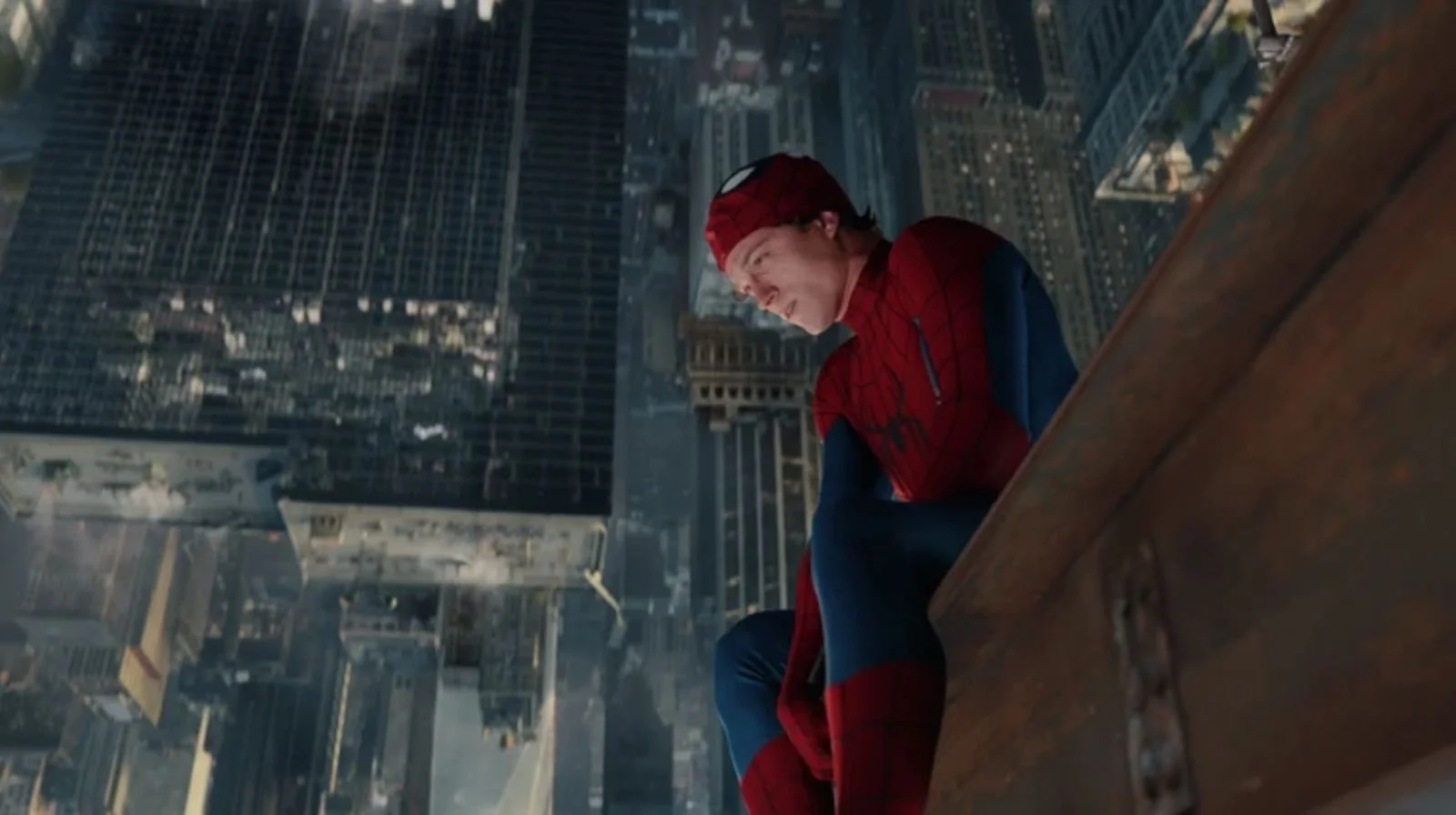
Everyone remembers Spider-Man. Nobody remembers Peter Parker.
Brand New Day picks up four years after the events of Spider-Man: No Way Home, when Peter asked Doctor Strange to make the entire world forget who he was. It was the only way to repair the multiversal mess he had helped create, but it came at a devastating cost: everyone Peter had ever loved — and everyone who had ever loved him — lost every memory of Peter Parker.
Spider-Man still exists. Peter, at least to the people who once formed his entire world, does not.
Now, Peter has thrown himself completely into being New York’s friendly neighbourhood hero. He works closely with NYPD detective Jean DeWolff, played by The Bear’s Liza Colón-Zayas, and spends his days stopping criminals such as Michael Mando’s returning Scorpion.
Spider-Man is famous. He is successful. He is needed. But Peter Parker is completely alone.
He misses MJ. He misses Ned. He misses the Avengers and the strange, chaotic family he found among them. He misses Aunt May. He misses being known by someone beyond the mask. Yet instead of building a new life, he keeps himself suspended outside his old one. Peter follows Ned and MJ on social media, quietly keeping track of the lives they have built without him. He watches from a distance, close enough to know that they are doing well but never close enough to be part of it. There is something particularly painful about that kind of loneliness. Peter has not merely lost the people he loves. He has to live in a world where they continue existing just beyond his reach.
Eventually, watching is no longer enough. Peter follows Ned to a party, entering the same room as his former best friend and the woman he still loves. He attempts to mingle, to act normal, to briefly step into the life he sacrificed. Then he discovers that MJ has a boyfriend. It is the final crack in a dam Peter has spent four years desperately trying to hold together. The emotional spiral that follows begins affecting his powers in alarming and potentially dangerous ways, turning everything he has refused to confront into something physical that can no longer be pushed down.
Holland has always been good at capturing Peter’s earnestness, nervous energy and youthful humour. Here, however, he is asked to carry something heavier. This Peter is older, quieter and more haunted. His familiar sweetness remains, but it now sits beneath layers of grief that Holland allows to surface in small, painful flashes.
Peter’s internal unraveling unfolds alongside a new threat that the Department of Damage Control is eager to eliminate. The suspicious government organisation is headed by Bill Metzger, played by Severance standout Tramell Tillman, who brings the same unsettling composure that has made him so captivating elsewhere.
The investigation places Spider-Man in the path of Frank Castle, better known as the Punisher. Jon Bernthal’s permanently furious vigilante makes an excellent foil for Holland’s painfully sincere hero. Peter believes almost everyone can be reasoned with. Frank often appears to believe the opposite. Their uneasy partnership generates some of the film’s funniest moments, particularly whenever Peter’s family-friendly sensibilities collide with Frank’s far more vulgar approach to crime-fighting. Yet beneath the humour, their dynamic reflects one of the film’s central questions: what happens when pain becomes the only thing guiding a hero?
Peter also crosses paths with several familiar faces, including Bruce Banner, who has stepped away from regularly Hulking out and now teaches physics to college students more interested in his celebrity than his syllabus. Florence Pugh’s Yelena Belova is another welcome addition. Pugh continues to possess the rare ability to make even the most ridiculous Marvel situation feel strangely natural, bringing her usual combination of dry humour, emotional bluntness and effortless charisma. Her scenes with Peter offer some much-needed levity without undermining the sadness running beneath the film.
With its government conspiracies, returning villains, evolving powers and crowded collection of Marvel personalities, Brand New Day certainly has the ingredients of another enormous superhero event. Thankfully, its heart remains somewhere much smaller.
At one point, Yelena refers to the kind of work Peter is doing as “small potato stuff”. He is not racing to stop the immediate destruction of the universe. He is helping individual people, pursuing street-level threats and trying to survive his own rapidly deteriorating emotional state.
And maybe Marvel needs more small potatoes.
After years of heroes repeatedly fighting to save all of existence, Brand New Day remembers that one person’s life can feel like an entire universe to them. Peter’s losses matter not because reality will collapse if he fails, but because they are his. The consequences are personal, intimate and sometimes painfully ordinary.

Then there is Sadie Sink.
Discussing her character without revealing one of the film’s biggest surprises is almost impossible, but the Stranger Things actress plays a significant role in bringing Peter’s buried turmoil to the surface. Whenever Sink and Holland share the screen, the film seems to tighten around them. Their scenes carry an almost unbearable emotional tension, frequently leaving the audience waiting for something — or someone — to break.
Sink brings a raw, unpredictable energy to the role. There are shades of the emotional volatility that made Elizabeth Olsen’s Scarlet Witch such a compelling presence in the MCU, but Sink never feels as though she is simply repeating Wanda Maximoff’s story. Instead, she channels a similar sense of immense pain threatening to spill beyond the person attempting to contain it. Her character is worth the secrecy and, more importantly, worth the wait.
Cretton understands how to frame these quieter encounters with as much urgency as the film’s largest action sequences. He allows conversations, silences and unfinished sentences to do the damage, trusting Holland and Sink to carry scenes without burying them beneath constant spectacle. Their moments together are among the most heart-wrenching and stomach-dropping in the film.
There are touches throughout Brand New Day that recall the earnest, street-level spirit of Tobey Maguire’s early Spider-Man trilogy. It can be felt in the city, in Peter’s isolation and in the sense that being Spider-Man is as much a burden as it is a gift.
After three live-action Spider-Men (Maguire, Andrew Garfield and now Holland), it would be easy for another story about Peter Parker’s suffering to feel repetitive.
It does not.
That is partly because we are so deeply entrenched in this particular Peter’s life. We watched him idolise Tony Stark, join the Avengers, lose Aunt May, meet alternate versions of himself and then surrender every meaningful relationship he had left.
The nostalgia in Brand New Day is not simply paraded in front of the audience for applause. It is felt through the film’s understanding of Spider-Man as a character who keeps moving despite carrying more grief than anyone around him can see.
The story itself is not revolutionary, and several twists can be predicted before the film reveals them. Yet it remains grounded enough to avoid becoming another hollow confrontation with a moustache-twirling villain. The action is energetic, the web-slinging remains thrilling and the humour generally arrives exactly when the film needs room to breathe.
Cretton strikes a strong balance between the exuberance audiences expect from Spider-Man and the more sombre story Peter now requires.
Still, at 142 minutes, the film does not always justify its length.

There are stretches that could have been tightened, particularly as the various government operations, supporting characters and future-facing storylines begin competing for attention. A sharper edit would have allowed the emotional centre of the film to breathe without making the journey feel quite so crowded.
It is a familiar Marvel problem. Some films are so committed to following the studio playbook that they leave audiences wishing for more. Others attempt to include so much that a leaner story would have created a stronger experience. Brand New Day falls into the latter camp. There is a wonderful, deeply human Spider-Man film at its centre. Occasionally, the machinery of the wider MCU threatens to obscure it.
What ultimately makes Brand New Day work is its refusal to give Peter an easy victory.
Superhero stories so often follow the same reassuring rhythm: the world is threatened, the hero arrives and everything that matters is saved. Peter may be bruised by the end, but the universe remains intact and the audience is allowed to leave relieved. This time, Peter cannot save everything.
That has always been essential to Spider-Man. When Andrew Garfield’s Peter failed to save Gwen Stacy, hearts broke because superhuman abilities could not protect him from a painfully human loss. Brand New Day understands that tragedy does not always arrive through death. Sometimes it is standing in front of someone who once loved you and realising that, to them, you are nobody.
When MJ finally learns what Peter once meant to her, the film resists the obvious fantasy. There is no true love’s kiss powerful enough to undo Doctor Strange’s spell. No sudden rush of memories restores everything they shared. She does not magically recognise him because their love was supposedly stronger than the rules of the universe.
She remembers nothing. She feels nothing.
It is devastating precisely because it feels honest. Love does not always conquer every impossible circumstance. Sometimes a relationship can be real, profound and life-changing, and still be lost. Giving MJ her memories back would have offered Peter instant relief. It would have given the audience that relief too. We want to see him happy because we have watched him suffer for so long. But Brand New Day does not mistake what we want for what its story needs.
Instead, the film places its greatest hope in friendship. Ned may have no memory of Peter, yet the two slip so naturally into one another’s rhythm that, for a moment, it becomes easy to forget they are technically strangers. The familiarity remains somewhere beneath the spell. Not as a complete memory, but as an instinct neither of them fully understands.
One particular scene offers the faintest suggestion that Ned may remember something. It is small, fleeting and far from the miraculous reunion audiences might expect. It is also more than enough to make the heart swell.
For all its villains, conspiracies and explosive set pieces, Spider-Man: Brand New Day is ultimately about a young man who has spent years hiding inside a superhero because being Peter Parker hurts too much.
The film does not solve that pain for him. It simply makes him confront it.
That is what makes this fourth outing feel deserving of its title. A brand new day does not necessarily mean waking up to a perfect life. It does not mean the people you lost return, the damage disappears or everything begins again exactly as you hoped. Sometimes, a brand new day simply means waking up and choosing to continue.
The film may be overstuffed, and its runtime could certainly lose some weight, but its emotional core remains remarkably intact. Holland delivers his most mature and affecting performance as Peter Parker yet, while Sink, Pugh, Bernthal, Batalon and Zendaya each deepen different parts of his fractured world.
Most importantly, Brand New Day remembers why Spider-Man has remained one of cinema’s most enduring heroes.
It is not only because he can swing between skyscrapers, cling to walls or sense danger before it arrives. It is because Peter Parker loses. He fails. His heart breaks. Then, somehow, he gets back up and helps someone else.
Marvel did not need another collapsing universe to make Spider-Man matter.
It only needed to let Peter Parker feel human again.