
Adapting Street Fighter has never been an easy proposition. The video game series may be one of the most influential fighting franchises of all time, but translating the appeal of choosing a fighter, stepping into an arena and beating an opponent senseless into a feature-length narrative is another matter entirely. Previous attempts have certainly proved as much.
The latest Street Fighter seems to understand that challenge. Rather than trying to reinvent the franchise or lend it a seriousness it has never really needed, the film embraces the heightened absurdity of its source material. The result is a colourful, campy and frequently ridiculous adaptation that is far more interested in having fun with the world of the games than grounding it in reality.
For the most part, it works.
There is an obvious affection for the games in the way Street Fighter constructs its world. Familiar locations, fighting styles and visual references are recreated with an eye towards making the film feel recognisably Street Fighter, without turning every nod to the games into an opportunity for fan service.
That makes the film accessible even to those without an encyclopaedic knowledge of the franchise. Longtime players will undoubtedly recognise more, but casual viewers aren't required to understand decades of lore to follow what is happening.
It is an especially impressive balancing act considering just how many characters the film has to contend with. With Ryu, Ken, Chun-Li, Guile, Blanka, Dhalsim and plenty more entering the ring, Street Fighter could easily have become a conveyor belt of introductions and origin stories. Surprisingly, it rarely feels overcrowded.
The film touches on honour, friendship and brotherhood, but keeps these threads connected to a relatively straightforward central narrative. Not every recognisable fighter is burdened with an elaborate subplot simply because audiences know their name, allowing the ensemble to exist within the same story rather than constantly pulling it in different directions.
That restraint is one of the film's biggest strengths. There is plenty happening, but Street Fighter rarely feels as though it is trying to tell five different movies at once.
The characters themselves, however, are where the adaptation becomes less convincing.
For a franchise built around fighters who have become so visually and culturally distinctive over decades, the casting doesn't always capture the personalities audiences associate with them. This isn't necessarily a question of physical resemblance — a live-action adaptation hardly needs to recreate every fighter pixel for pixel — but several performances lack that immediate feeling of recognition beyond a costume, hairstyle or signature move.
There are exceptions. Dhalsim is easily one of the film's highlights. He is also the kind of character who could have looked completely absurd when translated literally into live action, which makes seeing him properly realised on screen all the more satisfying.
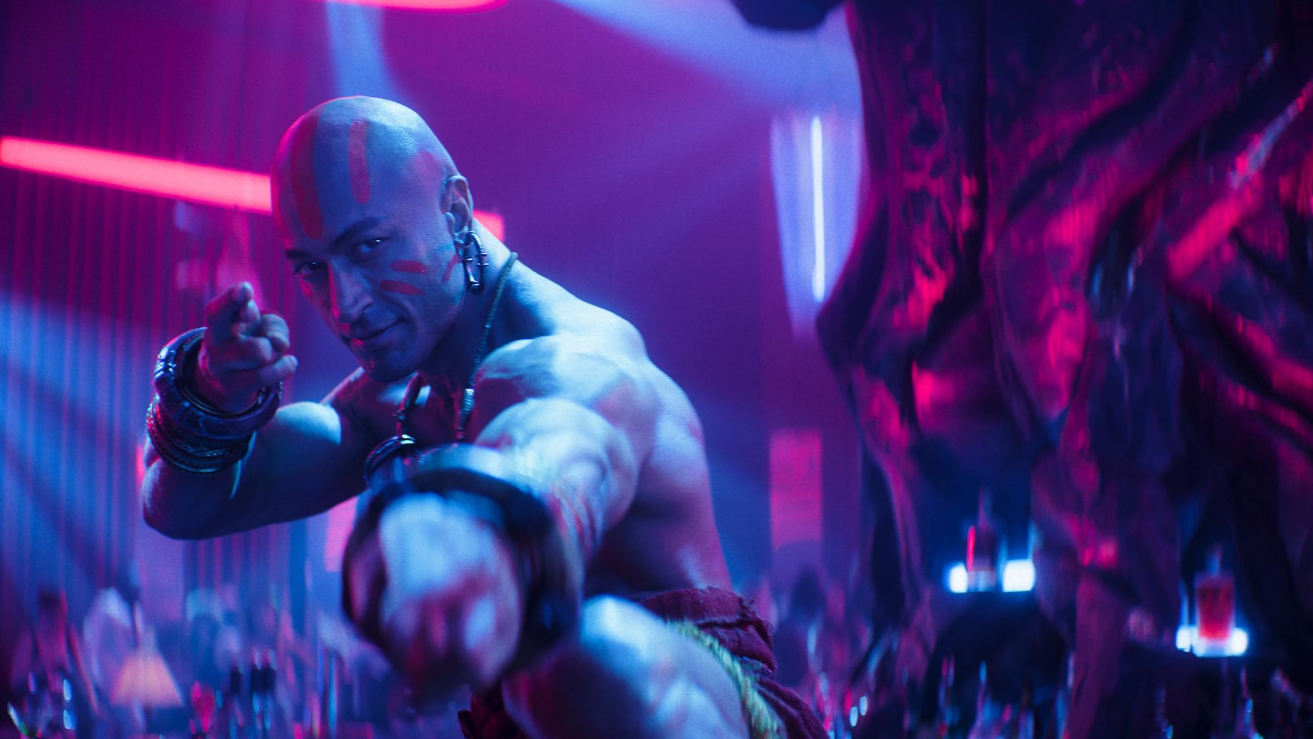
Then there is Jason Momoa's Blanka. Looking back at Momoa's roles since Aquaman, the actor appears to have entered what can only be described as his “hehe haha” era: big, eccentric performances that seem designed, above all else, to let him have a very good time.
And you know what? Good for him.
Momoa leans completely into the ridiculousness of the role, and even if it isn't the film's most transformative performance, his commitment fits perfectly with what Street Fighter is trying to be.
That brings us to perhaps the film's most defining quality: Street Fighter is very camp.
It establishes early on that it has absolutely no intention of treating this universe with complete seriousness. The world is exaggerated, the characters are exaggerated and the comedy follows suit. Some of it is genuinely funny. Other moments push so hard towards internet humour that they begin to feel more uncomfortable than comedic.
Guile, in particular, is played with such flamboyant energy that the film raises an unexpected but important question: Is Guile gay? Has, or for a matter of fact, when, did Guile become a gay icon? Queer audiences who somehow missed this crucial chapter of Street Fighter lore may require answers.
But even when the humour doesn't land, the commitment to a consistent tone keeps the film together.
Anyone expecting something closer to 2021's Mortal Kombat should probably adjust those expectations. That film approached its fantastical material with considerably more grit and seriousness. Street Fighter goes in almost the complete opposite direction, and is more importantly, refusing to be embarrassed by it.
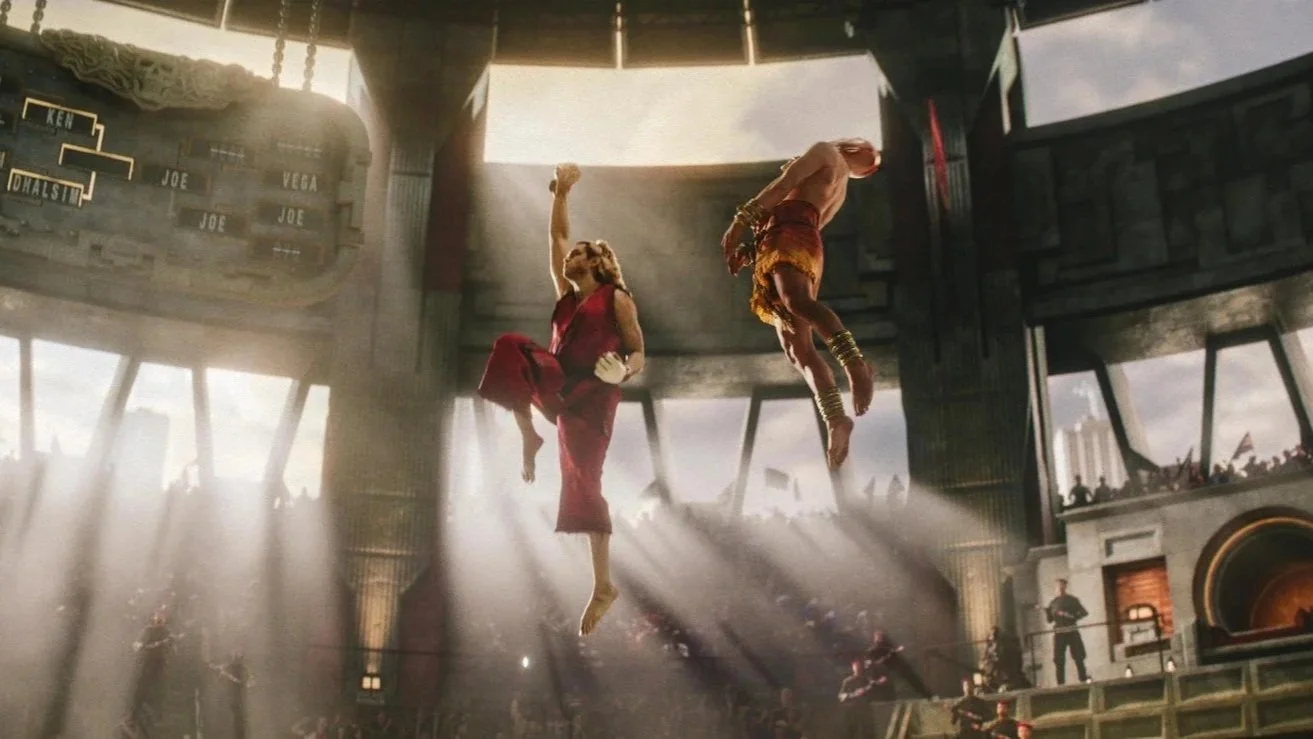
The film never spends one scene asking audiences to laugh at the characters before suddenly insisting they take the same material deadly seriously in the next. Once Street Fighter establishes what kind of movie it wants to be, it commits.
That confidence feels particularly notable amid the current resurgence of properties that once dominated consoles, toy boxes and childhood television screens.
With Mortal Kombat II, Masters of the Universe and now Street Fighter, there is a familiar challenge facing this latest wave of adaptations: How does a film honour what existing fans loved without becoming so consumed by nostalgia and fan service that there is nothing left for everyone else?
There needs to be enough familiarity to reward longtime fans, enough faithfulness to retain the identity of the original and enough accessibility for someone who might barely know the difference between Ryu and Ken.
And underneath all of that, there still needs to be an actual movie.
Of the recent attempts, Street Fighter arguably handles that balance best.
It neither runs from its source material nor becomes completely beholden to it. The references are plentiful without becoming the story itself, the large roster never becomes completely unwieldy and the narrative remains simple enough to leave room for the characters, fights and spectacle audiences are actually there to see.
Where that restraint disappears is in the runtime.
Street Fighter is long, and eventually it feels long. For a film that otherwise moves with such light, chaotic energy, there are stretches that could have benefited from a much tighter edit. Its simplicity works in its favour narratively, but it also means there isn't always enough substance to justify how long the film keeps audiences in their seats.
There is also an unmistakable sense that this is intended to be the beginning of something larger. The film leaves plenty of room for its world and characters to expand, and by the end, it is difficult to escape the feeling that the filmmakers are very much manifesting another round. Whether they get one remains to be seen.
What Street Fighter has accomplished this time around, however, shouldn't be dismissed. It is a far cry from being as revolutionary or game-changing as the video game franchise that inspired it. The games helped redefine an entire genre; this film isn't about to do the same for video game adaptations.
But perhaps it doesn't need to.
What it needed to do was prove that Street Fighter could work as a modern live-action movie without losing the larger-than-life characters, exaggerated action and distinct personality that have defined the games for decades.
The casting doesn't always convince, the humour occasionally becomes too pleased with its own meme-worthiness and the runtime could certainly lose some weight. But Street Fighter is also coherent, energetic, unapologetically camp and, most importantly, fun.
After decades of uneven attempts to bring these fighters from the arcade to the big screen, Street Fighter may not land every hit, but this is genuinely one of the better attempts at finally getting the fight right.